Incident
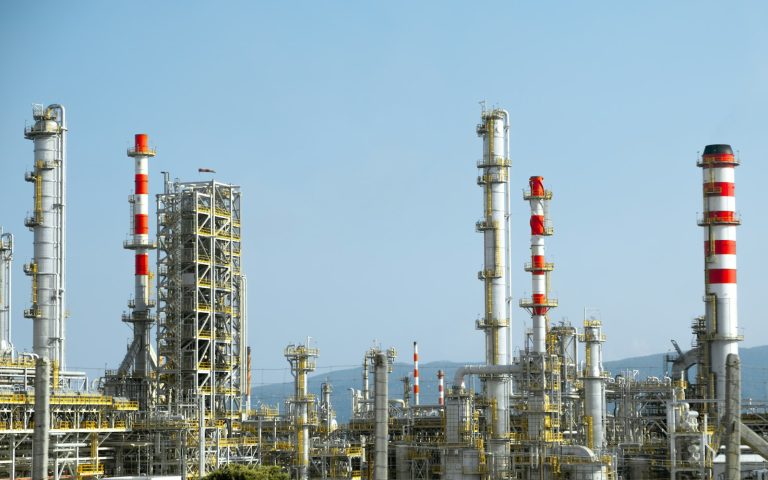
On Monday 28 April 2025, 13 people were affected by a chlorine leak at the Fos-sur-Mer, France site of chemical company KEM ONE. The incident occurred at around 2:10 p.m. during maintenance work on the plant’s chlorine unit, where some 330 employees were present. Two employees of subcontractor ORTEC were dismantling a component (a “trident” fitting) from a liquid chlorine pipeline. The isolation valve that was meant to isolate the pipeline turned out to be leaking, leaving around 5 bar of pressure still on the line. After the four fastening bolts were cut through in one go with an angle grinder and the component was pulled free, a vertical jet of chlorine was released. The ORTEC employee involved was thrown backwards and briefly became trapped in the pipework, but managed to free himself.
The leak was stopped after about a quarter of an hour, at 2:25 p.m. Of the 13 people treated, 9 were taken to hospitals in the region; seven were able to go home the same evening, and the remaining two the following day. The report records no fatalities. Three detectors located 50 to 120 metres from the leak point recorded a peak concentration of 50 ppm. According to the investigation report, there was no environmental damage and no risk to nearby residents; as a precaution, a neighbouring company downwind was temporarily placed in shelter-in-place.
Findings
The French investigation body BEA-RI (Bureau d’Enquêtes et d’Analyses sur les Risques Industriels) identifies a faulty isolation valve as the direct cause in report MTE-BEARI-2026-01. Due to inadequate maintenance and inspection, the manually operated valve (D03205) had become fouled and corroded, causing it to leak around 20 litres of chlorine per hour, so the pipeline was not actually depressurised at the time of the work. BEA-RI stresses that this type of valve leakage occurs fairly often in industry. As a second cause, the report cites failure to correctly follow the internal instruction for safely opening pipeline circuits (INS-SEC-020); correct application of this instruction, the investigators say, would have prevented the accident.
The report also identifies contributing factors: an incomplete work permit that was approved too quickly and lacked a pipework diagram; the absence of a joint check between the client and the subcontractor to confirm the installation was genuinely out of service; and cutting all four fastening bolts at once instead of a controlled, step-by-step dismantling. Respiratory protection was also lacking among the colleagues standing further away. BEA-RI further points to organisational factors such as reduced vigilance following a similar operation a few weeks earlier, after a rupture disc failed on 7 February 2025, and excessive mutual trust between the client and the subcontractor.
Recommendations
BEA-RI addresses recommendations to both parties involved. KEM ONE, as the operator, is recommended to enforce and validate the instruction for opening circuits more strictly, to review the reporting process for dangerous situations, to introduce a procedure for mutual verification of shutdown with subcontractors, to check before every intervention in risk zones whether staff are following the respiratory protection manufacturer’s instructions and the training instructions, and to evaluate the shelter and evacuation strategy for personnel, including the possible use of escape hoods. It is also recommended that drills be held regularly with the fire department and that the emergency plan be kept up to date.
For subcontractor ORTEC, BEA-RI recommends verifying, together with the client before every intervention, that an installation is genuinely depressurised and de-energised; making the wearing of respiratory protection masks mandatory in the work area; opting, wherever possible, for a controlled, step-by-step dismantling (bolt by bolt) rather than loosening all fastenings at once; and likewise checking before every intervention in risk zones whether staff are following the respiratory protection instructions and the training instructions. The BEA-RI investigation is a technical safety inquiry that is not intended to establish fault or liability. The recommendations are not binding; however, the addressees must inform BEA-RI within two months of the action they intend to take, and that response will be published.
Context
Chlorine is among the hazardous substances for which EU Directive 2012/18/EU (“Seveso III”) imposes obligations on installations working with such substances above certain threshold quantities: they must identify, control and limit the risks of major accidents, and maintain up-to-date emergency plans. Chlorine incidents continue to occur elsewhere as well: in May 2025, a chemical plant operated by Olin Corporation in Freeport, Texas (United States), released around 10,000 pounds (approximately 4,500 kilograms) of chlorine during a leak lasting just over 45 minutes, in which four employees were taken to hospital and nearby residents were temporarily told to shelter indoors.
For HSE professionals worldwide, the KEM ONE investigation underscores a recurring risk in the chemical industry: valves that isolate a circuit on paper but keep leaking in practice due to wear or corrosion. The report shows that technical safeguarding of valves alone is not sufficient without a work-permit process in which pipework diagrams, pressure checks and joint verification between client and subcontractor are structurally embedded. That makes the findings relevant to any operator working with hazardous substances, regardless of country or sector.
Source: BEA-RI investigation report MTE-BEARI-2026-01: chlorine leak at KEM ONE, Fos-sur-Mer, 29 January 2026
Additional research: EU Directive 2012/18/EU (Seveso III) on the control of major-accident hazards involving dangerous substances; reporting on the chlorine leak at Olin Corporation in Freeport, Texas, May 2025.