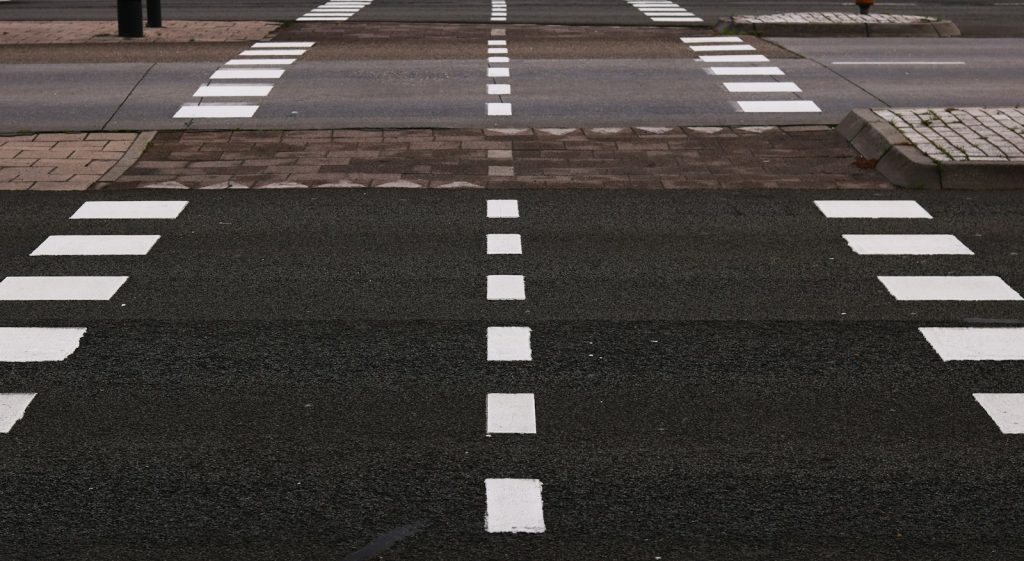
Transport for London (TfL) has been fined £2 million plus £5,081 in costs by Westminster Magistrates’ Court, after a 74-year-old pedestrian was struck and killed by a double-decker bus at Walthamstow bus station in London, United Kingdom, on 15 December 2023. The court found that TfL had failed to manage the risk at that crossing for almost two decades, despite a similar incident in 2022 and five near-misses in the two days before the fatal collision.
What happened
The collision happened at around 5pm on 15 December 2023, on a designated pedestrian crossing at Walthamstow bus station, leading from Rose Bank Villas in London. The 74-year-old pedestrian was crossing and had covered around two-thirds of the crossing when a route 212 bus came round the bend and struck her. She died at the scene from her injuries.
HSE’s investigation found that the crossing sat in the middle of a bend where buses entered the bus station. That position, and the angle at which buses approached, meant drivers could turn towards the crossing without a full view of its length. Westminster Magistrates’ Court ruled on 25 September 2026, following a guilty plea from TfL, that the company had breached Regulation 17(1) of the Workplace (Health, Safety and Welfare) Regulations 1992. A £3 million starting point was reduced to a £2 million fine in recognition of the guilty plea.
Conclusions
HSE inspectors found that TfL had failed to ensure pedestrians and vehicles could circulate safely at the bus station, and had not adequately supervised the bus drivers working there. A similar accident in April 2022, in which a pedestrian was struck by a bus at the same location, should have prompted a risk reassessment — the investigation found this did not happen. CCTV also recorded five near-misses in the two days before the fatal collision, none of which led to any intervention. The judge noted that TfL had relied on generic and inadequate risk management systems for this location for almost 20 years.
Recommendations
Unlike a full technical investigation report, HSE’s press release does not set out a separate, numbered list of recommendations. It does, however, point to the Approved Code of Practice (ACOP) for the Workplace (Health, Safety and Welfare) Regulations 1992, and to HSE guidance L24 and HSG136 on the organisation of traffic, including vehicles, pedestrians and crossings. These documents describe how a workplace should be organised so that pedestrians and vehicles can circulate safely and be kept apart. In the absence of a separate recommendations report, they serve here as the closest equivalent.
Context
Limited visibility of pedestrians from the driver’s seat around bus stops and stations is a well-known risk across the sector, not just in London. According to the UK trade magazine routeone (2023), pedestrians account for around half of all deaths and serious injuries in collisions involving London buses. Since 2021, new buses have been fitted with digital camera systems that reduce blind spots and with geofenced speed limiting; TfL also aimed to have nearly 1,000 London buses fitted with an acoustic warning system for pedestrians and cyclists by the end of 2023. TfL says deaths in collisions involving London buses were 65% lower at the end of 2022 than in the 2005-2009 baseline, though eight people were still killed in or by a London bus that year. It underlines that transport operators and road authorities worldwide need to keep treating crossings at bus stops and stations as a structural safety priority, even where measures have already been taken.
Source: HSE press release: Transport for London convicted after pedestrian, 74, killed while crossing road, 25 September 2026
Additional research: Waltham Forest Echo; route-one.net on TfL’s Bus Safety Strategy