
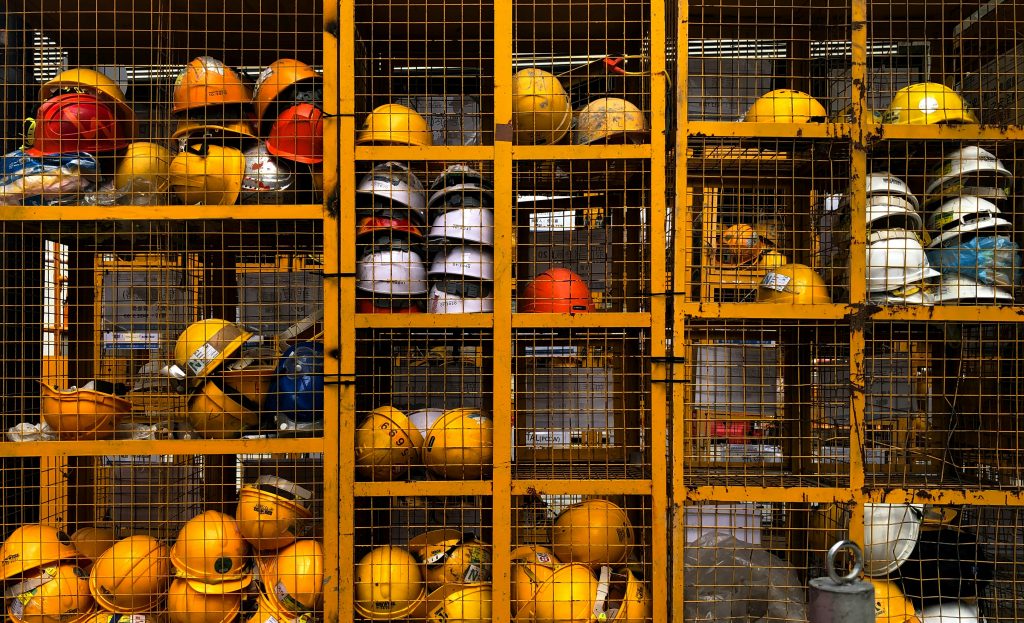
A European testing campaign on personal protective equipment (PPE) has once again exposed how shaky the compliance of widely used safety equipment can be. Of the safety footwear tested, 82 percent turned out not to meet the applicable standard, while for safety helmets, 19 of the 65 tested models — more than 29 percent — failed to pass. The results were published in late September 2026 and go straight to the question of how much value market surveillance and CE marking still hold in practice for employers and workers who rely on this equipment.
Context
The European PPE Regulation 2016/425 has, since 2018, governed the requirements for personal protective equipment placed on the EU market. Manufacturers must demonstrate that their product meets the relevant harmonised standards before it receives a CE mark, and for equipment protecting against serious risks — such as safety footwear and helmets — involvement of a notified body is also mandatory. The regulation places primary responsibility for compliance with the manufacturer, but national market surveillance authorities check through spot checks whether products actually deliver on that promise.
What the JACOP campaign exposed
The tests were carried out under JACOP (Joint Actions on Conformity of Products), a coordinated action by the European Commission together with national market surveillance authorities from several member states. For safety footwear, products were tested in Cyprus, Germany, Luxembourg, the Netherlands, Norway, Portugal, Spain and Sweden. According to the main source, actuEL-HSE, the failures mainly involved three points: insufficient shock resistance, insufficient resistance to cutting and puncturing, and insufficient antistatic properties — each a property that, in industrial and construction settings, can directly make the difference between an abrasion and a serious injury.
For safety helmets, the campaign ran in Belgium, Cyprus, Germany, Greece, Ireland, the Netherlands, Spain and Sweden. Of the 65 helmet models examined, 19 did not meet the standard, a non-compliance rate of around 29 percent. That is considerably lower than for footwear, but still a substantial share of a product category that is literally meant to protect the head.
What this means in practice
For HSE professionals, the outcome is a prompt to keep assessing suppliers and product documentation critically, even when a product carries a CE mark. The campaign confirms a pattern that market surveillance authorities have flagged for some time: certification at market entry does not guarantee that a product still meets the standard years later, or when sourced from a different batch of the same product line. Concrete recalls or sanctions resulting from this specific campaign have not yet been confirmed in detail; there is also a minor point of ambiguity around the exact naming, as a Luxembourg source refers to “JACOP 2025” while the results were only published in September 2026. Industry bodies recommend requesting test certificates from notified bodies directly, where possible, when procuring critical PPE.
Additional sources reviewed: Batirama, Batiweb
Source: EPI : 82 % des chaussures de sécurité testées non conformes selon une campagne européenne, 24 September 2026


