
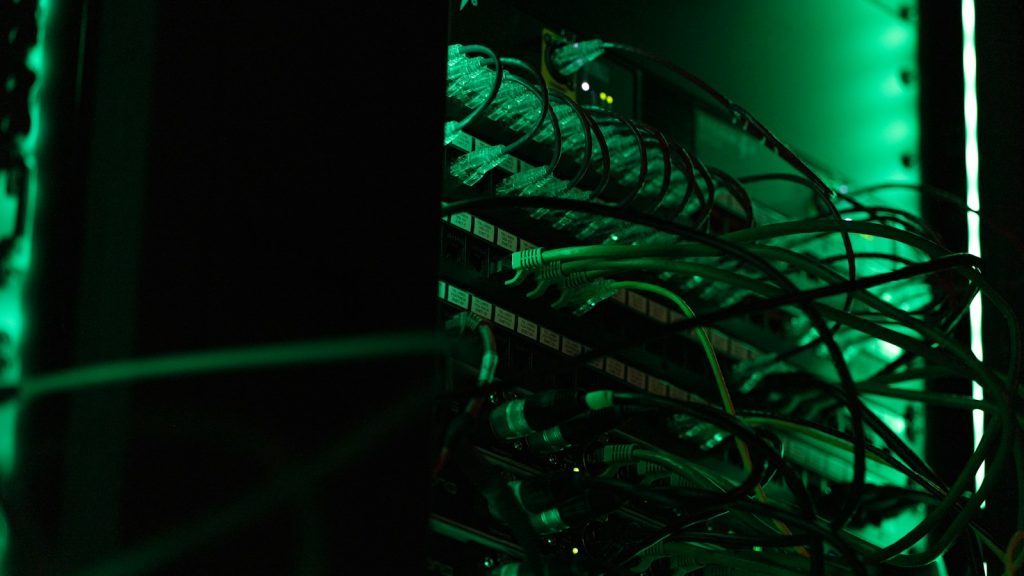
In the hazard assessment of data centers, the Verantwortliche Elektrofachkraft (VEFK) — the “responsible qualified electrical professional” under German law — must weigh not only the classic risks of electric shock and arc flash, but also the data center’s own complex power supply chain. That is the conclusion of an article published on 9 November 2026 by the German trade outlet Haufe.de on the VEFK’s role in data centers. The source specifically highlights backfeed and the interplay between transformer, UPS and emergency generator, as well as the DC hazards of UPS batteries, as points of attention for the risk analysis.
Electrical risks and the VEFK’s role
Data centers combine classic occupational safety requirements with an environment that is permanently energized. Haufe.de lists, among other things, electric shock and arc flash during work on servers, UPS systems and transformers, short-circuit risks in battery rooms, fire, asphyxiation hazards from gas suppression systems, noise from servers and cooling, and large temperature differences between cold and hot aisles.
The VEFK plays a central, legally anchored role in this: she draws up the hazard assessments, sets inspection intervals, defines protective measures and arranges training. This function can be filled by an in-house employee or by an externally contracted specialist; the VEFK works free of instructions (“weisungsfrei”) from others, but management remains ultimately responsible. Concrete measures named in the article include personal protective equipment against arc flash, interlocks and access control, inspection intervals under DGUV Vorschrift 3, a qualification matrix defining who may carry out which work (qualified electricians, electrotechnically instructed persons or IT staff), and binding work and operating instructions.
What DGUV Vorschrift 3 and the US NFPA 70E standard require for electrical risk management in data centers
Haufe.de itself does not give concrete inspection figures. According to an overview by the German trade publisher Forum Verlag (forum-verlag.com), the implementing regulation of DGUV Vorschrift 3 — formerly BGV A3, and still in force — sets guideline values: fixed installations are generally inspected every 4 years, operating premises and installations of a special nature annually, and portable equipment generally every 6 months, or every 3 months on construction sites. The US arc-flash standard NFPA 70E works differently: according to an explainer on fabrico.io, the incident energy is calculated using the IEEE 1584 method, and on that basis four categories of personal protective equipment apply, with minimum values of 4, 8, 25 and 40 cal/cm². Under that standard, arc-flash risk assessments and their accompanying labels must be reviewed for accuracy at least every 5 years, with personal protective equipment explicitly treated as the last line of defense, after elimination, substitution, and engineering and administrative controls. The key difference lies in the underlying system: the German approach places responsibility with a single designated VEFK who sets inspection intervals and measures for the entire company, while the US standard starts from a prior, task-specific risk assessment for each job, with a standardized PPE category based on a calculated energy value.
What does this mean in practice?
For operators and facility managers of data centers and colocation spaces, this means that the presence and authority of a VEFK, whether in-house or external, determines inspection intervals and access restrictions for electrical installations. Electrotechnical and IT staff working on or near live equipment would do well to check whether their own authorization matches the qualification matrix, and whether inspections of fixed and portable installations are actually scheduled in line with DGUV Vorschrift 3. Whether a server room falls under the stricter one-year interval for premises of a special nature is something the VEFK determines itself in the hazard assessment.
Source: Schutzmaßnahmen in Rechenzentren: Risiken erkennen, Sicherheit schaffen (Haufe.de), 09-11-2026
Additional research: forum-verlag.com: DGUV Vorschrift 3 and NFPA 70E (arc-flash standard)