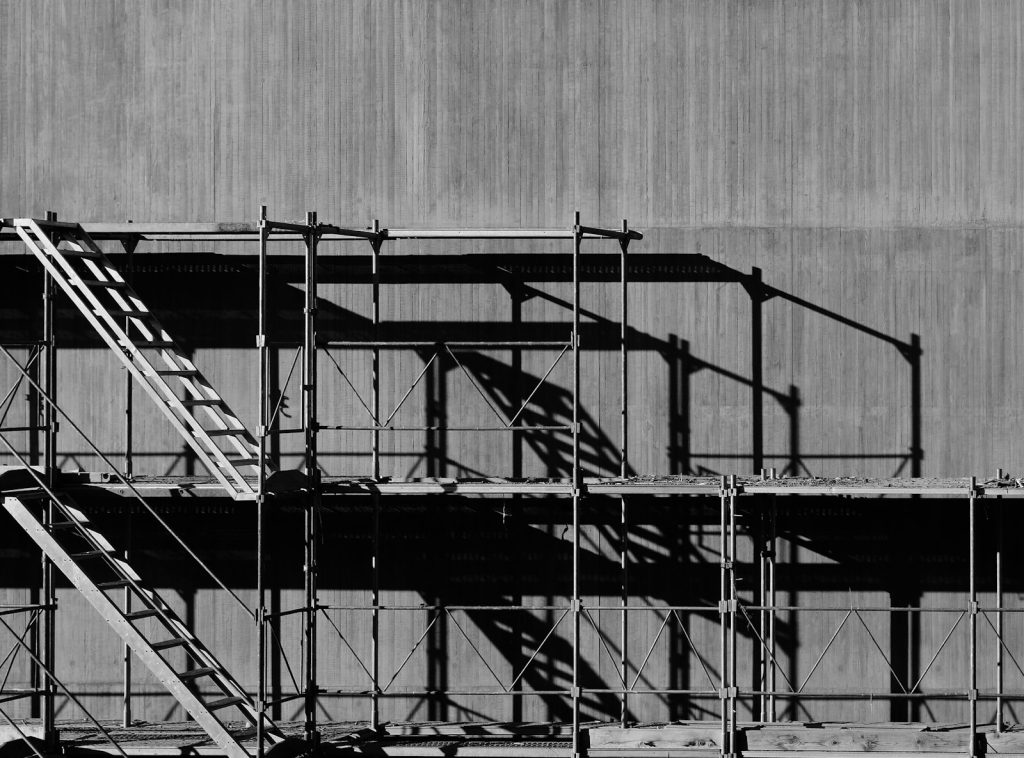
The U.S. Occupational Safety and Health Administration (OSHA) published the final figures for the most frequently cited safety standards of fiscal year 2025 (October 2024 through September 2025) in April 2026. Three standards stand out: fall protection, hazard communication, and construction ladders. Together they accounted for nearly 12,850 violations in that fiscal year.
Which violations occur most often?
General fall protection requirements (29 CFR 1926.501) rank first for the fifteenth consecutive fiscal year, with 6,992 violations. Common shortcomings include missing or inadequate guardrails at elevated work areas and personal fall arrest systems that are not properly inspected or used.
Hazard communication (29 CFR 1910.1200, hazardous chemicals) ranks second, with 3,010 violations. Recurring shortcomings include a missing written program, outdated safety data sheets, and missing or illegible labels on secondary chemical containers.
Construction ladders (29 CFR 1926.1053) rank third, with 2,842 violations: damaged ladders kept in use, ladders placed on unstable surfaces, and ladders that do not extend far enough above the landing surface.
How to avoid a fine
For fall protection: regularly inspect elevated work areas, repair damaged barriers immediately, maintain a written fall protection plan, and train workers to check and use anchor points, connectors, and fall arrest systems before every use.
For hazard communication: keep a complete inventory of all hazardous chemicals on site, verify that safety data sheets are current and accessible, replace damaged or illegible labels, and update the program whenever new chemicals are introduced.
The financial incentive to keep these basic rules in order is significant: since January 15, 2025 (the amounts were not adjusted for inflation in 2026), the maximum penalty for a serious violation is $16,550 per violation, rising to $165,514 per violation for a willful or repeated violation, according to OSHA.
For ladders, the rule of thumb is that a ladder should extend at least about ninety centimeters above the landing surface and be set at an angle where the base sits about one-quarter of the ladder’s working length from the wall (the 1:4 rule). Periodic inspection by a competent person, immediately tagging and removing damaged equipment from service, and maintaining three points of contact while climbing are common measures to reduce the risk.
Context
According to OSHA’s official ranking of most frequently cited standards (osha.gov/top10citedstandards), the same three standards also appear in the full top 10 for fiscal year 2025, followed by, among others, control of hazardous energy (lockout/tagout), respiratory protection, and scaffolding. According to Safety+Health Magazine, fall protection has now held the top spot for fifteen consecutive fiscal years. In the United Kingdom, falls from height are also a major risk: according to the UK’s Health and Safety Executive, they accounted for 8 percent of reported non-fatal workplace injuries in 2024/25.
OSHA has since released its preliminary ranking for fiscal year 2026 at the NSC Safety Congress & Expo in September 2026 (data through August 2026). Fall protection tops the list for the sixteenth year in a row; lockout/tagout is third and construction ladders drop to fifth place.
Source: The Top 3 Citations from OSHA This Year and the Practical Steps to Avoid Them at Your Facility, September 25, 2026
Also consulted: Safety+Health Magazine, OSHA reveals final ‘Top 10’ data for FY 2025; OSHA, Top 10 Most Frequently Cited Standards; OSHA, 29 CFR 1903.15 (penalty amounts); ISHN, OSHA Reveals Top 10 Workplace Safety Violations for 2026