A new EU directive significantly tightens the rules on exposure to carcinogenic, mutagenic and reprotoxic substances (CMR agents). Directive (EU) 2026/2450, adopted by the European Parliament and the Council of the EU on 21 October 2026, amends the existing CMR Directive 2004/37/EC. It introduces new binding limit values for four substances or groups of substances and officially recognises welding fumes as a carcinogenic process. Prebes, the Belgian professional association of prevention advisers, reported on the directive on 5 November 2026. This is EU legislation that must be transposed into national law in all member states, making it relevant to HSE professionals across the Union, not only in Belgium.
New limit values for cobalt, PAHs, isoprene and 1,4-dioxane
Cobalt and inorganic cobalt compounds, PAH mixtures (polycyclic aromatic hydrocarbons, measured as benzo[a]pyrene), isoprene and 1,4-dioxane receive a binding limit value. For mercury, the directive only clarifies which compounds the existing limit value applies to; for lead, the biological limit value is lowered. A binding limit value is the maximum concentration of a substance in workplace breathing air that member states may not exceed.
Directive (EU) 2026/2450 was published in the Official Journal of the EU on 30 October 2026. The new limit values include 0.01 mg/m³ (inhalable fraction) and 0.0025 mg/m³ (finer, respirable fraction) for cobalt, 8.5 mg/m³ (3 ppm) for isoprene, 7.3 mg/m³ as a general limit and 73 mg/m³ as a short-term limit for 1,4-dioxane, and 0.00007 mg/m³ (measured as benzo[a]pyrene) for PAHs. These are the same values that the US professional association AIHA reported in July 2026 from the provisional political agreement. For cobalt, higher transitional values (0.02 and 0.0042 mg/m³) apply for six years, and for PAHs a doubled value (0.00014 mg/m³) applies in certain sectors for seven years, as the Danish legal platform Lovguiden also reports.
Welding fumes officially recognised as a carcinogenic process
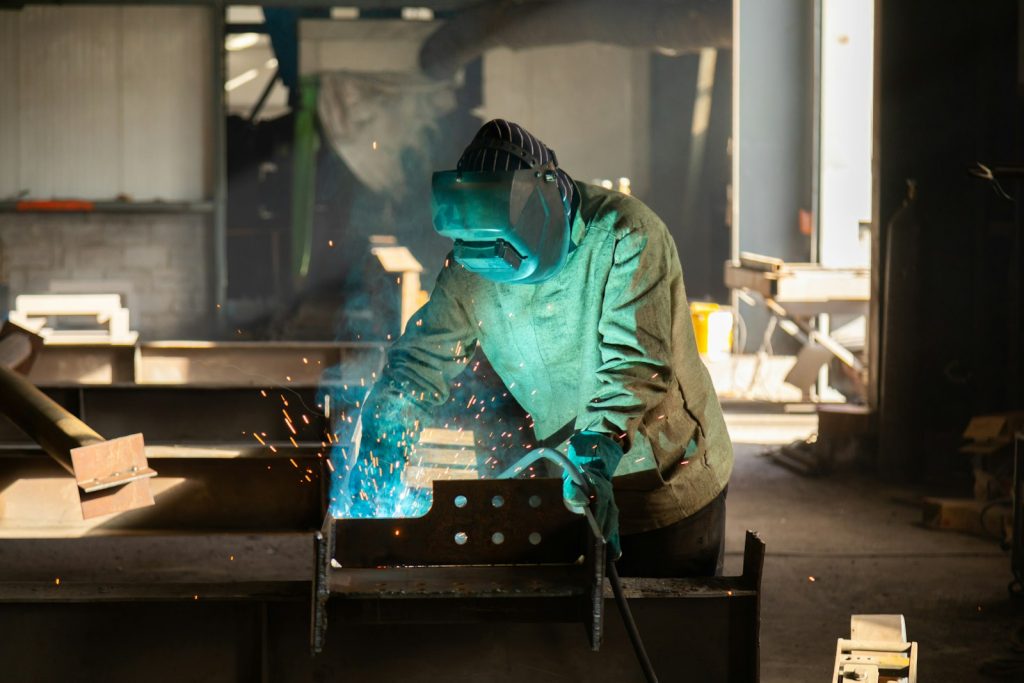
A key change is that welding fume generated during work activities is now officially recognised as a process in which workers are exposed to carcinogenic substances, according to Prebes. Employers must therefore first tackle exposure at the source, for example through process changes, extraction or substitution, before deploying personal protective equipment (PPE). According to the Brussels Times and Lovguiden, this is achieved by adding welding fumes to Annex I of the CMR Directive, the list of substances, mixtures and processes covered by the directive. According to Prebes, the directive also tightens the requirements for personal protective equipment and updates the biological limit values used to monitor exposure through blood or urine measurements.
Transposition by member states and consequences for HSE files
According to the Brussels Times and Lovguiden, which reported on the formal adoption by the Council of the EU on 19 October 2026, member states have two years after entry into force to transpose the directive into national legislation: by 20 November 2028 at the latest. For HSE professionals, this means that risk assessments, exposure measurements and the HSE documentation files of companies working with the substances mentioned or with welding processes must be updated in good time once national transposition takes effect. According to the Brussels Times, the tightened rules could prevent an estimated 1,700 cases of lung cancer and 19,000 other cases of illness over a period of forty years.
Context
Internationally, this step follows earlier scientific evidence: the World Health Organization’s International Agency for Research on Cancer (IARC) already classified welding fumes in 2017 as Group 1, “carcinogenic to humans”, based on sufficient evidence of an increased risk of lung cancer in welders (IARC Monograph 118). Group 1 is IARC’s highest category, but such a classification is a scientific assessment, not a legal obligation. With its inclusion in the CMR Directive, that assessment now has a binding legal consequence within the EU: employers must treat exposure to welding fumes like other carcinogenic agents, with priority given to measures at the source.
Source: Nieuwe regels voor CMR-agentia en lasrook, 5 november 2026
Additional sources consulted: IARC: Welding Fumes, UV Radiation from Welding are Carcinogenic (AIHA), Welding fumes classified as workplace threat under updated EU safety rules (Brussels Times), EU legislators agree on new limit values for certain chemicals (AIHA), Rådet vedtager nye EU-grænseværdier for kobolt og svejserøg på job (Lovguiden)