A scaffolding company in Pickering, North Yorkshire, United Kingdom, has been fined after a trainee scaffolder died in a fall on a construction site near Ripon, North Yorkshire, United Kingdom. The accident happened on 5 July 2023, when the trainee fell five metres after stepping on an unsecured scaffold board. Leeds Magistrates’ Court fined the company on 4 November 2026 following a guilty plea.
What happened
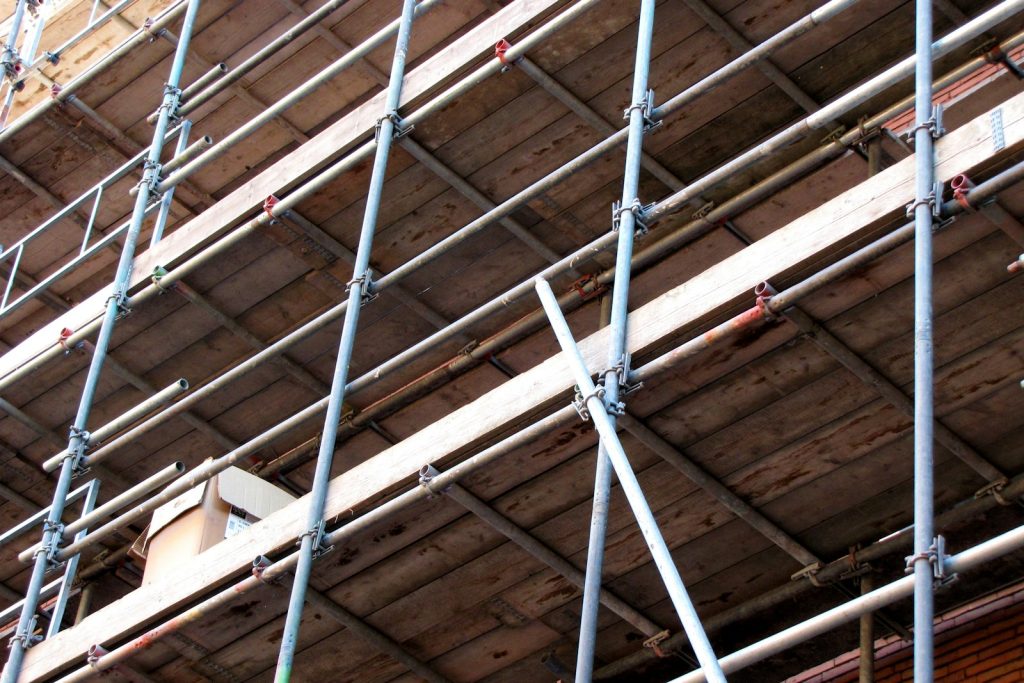
The trainee scaffolder was working alongside a colleague to erect scaffolding on a partially built structure, part of a new-build project for two houses near Ripon. While working, he stepped on a scaffold board that had not been secured and fell five metres to the ground. Emergency services attended the scene, but the victim died at the site.
Ask Scaffolding Ltd, based at the Thornton Road Industrial Estate in Pickering, pleaded guilty on 4 November 2026 before Leeds Magistrates’ Court to breaching Regulation 4(1)(c) of the Work at Height Regulations 2005, the UK’s rules on safe working at height. The court fined the company £16,000, plus £8,000 in costs and a £2,000 victim surcharge: a total of £26,000.
What the court found
The investigation by the Health and Safety Executive (HSE), the UK’s workplace safety regulator, and the subsequent court case found that Ask Scaffolding Ltd had failed, so far as was reasonably practicable, to ensure safe working at height. Insufficient measures had been taken to prevent or limit the risk of a fall, and no so-called safe zone, a cordoned-off, protected working area for scaffolders, had been set up. Neither the trainee nor his colleague was wearing a harness or lanyard at the time of the accident.
The court further found that the work did not comply with the applicable industry guidance for scaffolding. Scaffolding the company had erected previously also failed to meet that guidance: an inspection carried out after the accident found guardrails missing where they should have been in place. Several witnesses stated that the company’s employees regularly carried out scaffolding work without following the applicable guidance.
HSE stresses that collective protection, in the form of an established safe zone, is the primary means of preventing scaffolders from falling. Personal protection such as a harness and lanyard must be used as soon as a scaffolder works outside such a safe zone. Employers and scaffolding companies are responsible for ensuring that scaffolding work is carried out safely and in line with industry guidance.
Context
Falls from height are also the leading cause of fatal accidents in construction across the European Union, according to the European Agency for Safety and Health at Work (EU-OSHA). According to 2023 Eurostat figures cited by the agency, almost a quarter (23 percent) of all fatal workplace accidents in the EU occurred in the construction sector. Slips, trips and falls are the leading cause of both fatal (30 percent) and non-fatal (20 percent) construction accidents.
Within the EU, scaffolding is covered among others by Directive 2009/104/EC, which requires a competent person to draw up a plan for the erection, use and dismantling of a scaffold, and by the framework Directive 89/391/EEC on occupational safety in general. For work at height, EU-OSHA sets out a fixed order of measures: avoid work at height where possible, prevent the risk of falling where work at height is unavoidable, and only as a last resort mitigate falls, for example with fall-arrest equipment or a safety net. The case against Ask Scaffolding Ltd shows what happens when basic measures such as a cordoned-off safe zone and personal fall protection are missing, even at a company that specialises in scaffolding.
Source: Scaffolding company fined after trainee scaffolder killed in five-metre fall, 6 November 2026
Additional research: EU-OSHA OSHwiki: Construction safety risks and prevention