A paper products manufacturer in St Helens, England (United Kingdom), has been fined £80,000 after an employee suffered a serious hand injury. Her right hand was trapped in the printing rollers of a production machine for several minutes, causing permanent damage to several fingers. The company, which makes napkins and other paper products, pleaded guilty to breaching UK regulations on the safe use of work equipment.
What happened
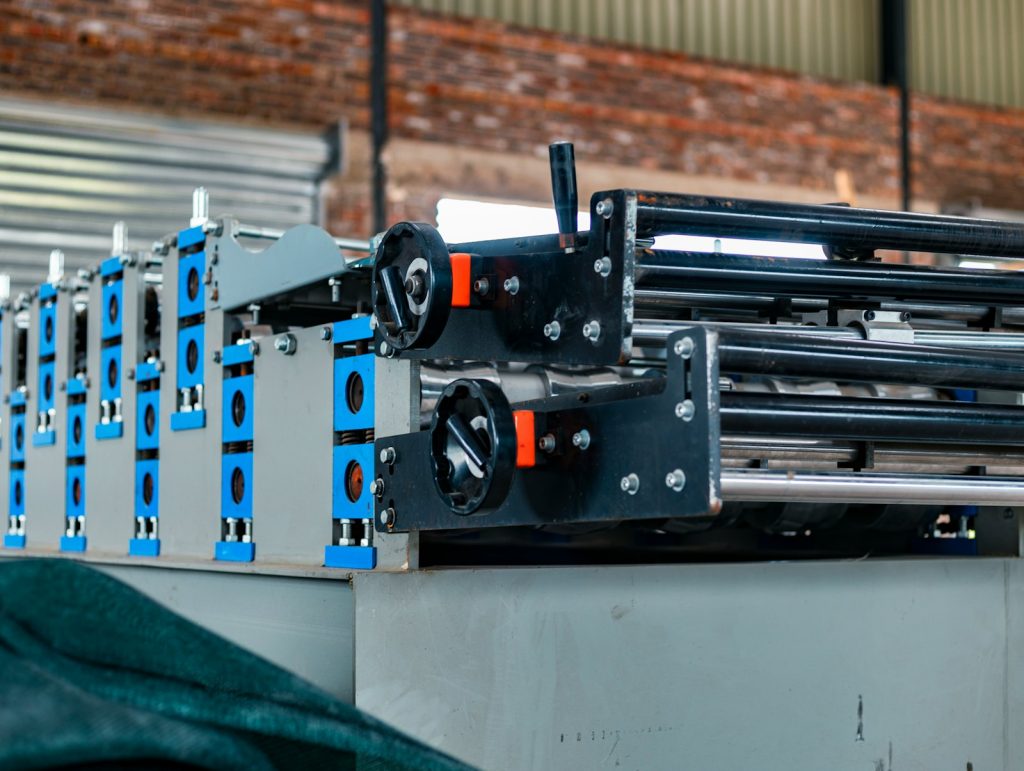
According to HSE, the employee — a machine operator with 11 years of experience at Duni Poppies Limited — was cleaning the rollers of a machine that embosses logos and patterns into tissue paper before it is folded into napkins when her right hand was pulled in. The machine had no interlocked guard, leaving the rollers accessible while they were turning. Her hand remained trapped between the printing rollers for several minutes before she could be freed. The injury was severe: full amputation of her little and ring fingers, partial amputation of her index and middle fingers, and permanently increased sensitivity in the hand. Because it is her dominant hand, she now struggles with everyday tasks such as cooking and can no longer pursue hobbies such as cycling, knitting and gardening.
Findings
An investigation by the UK Health and Safety Executive (HSE) found that the machine had no interlocked guard around the hazardous printing rollers, allowing staff to reach the moving parts while the machine was running. HSE found that the company should have properly assessed the risks and put in place adequate control measures. Duni Poppies Limited pleaded guilty to breaching Regulation 11(1) of the Provision and Use of Work Equipment Regulations 1998 (PUWER), the UK’s regulations on the safe use of work equipment. On 3 November 2026, Warrington Magistrates’ Court fined the company £80,000 and ordered it to pay a further £4,756 in costs.
Recommendations
HSE inspector Gemma Feerick described the incident as avoidable: a proper risk assessment and adequate control measures could have prevented the injury. “This avoidable incident led to an experienced worker suffering a life-changing injury,” Feerick said. She added that HSE will not hesitate to take action against companies that fall below the expected standards. The press release contains no separate technical recommendation; the key finding is that an interlocked guard around the rollers was missing.
Context
The same PUWER provision was central to an earlier case described by UK law firm Forbes Solicitors. Alfaplas Limited, a printed plastics manufacturer in Hereford, England, was fined £150,000 plus £14,379 in costs after a supervisor’s safety vest became caught in an unguarded, rotating printing press shaft in 2019, causing him to lose consciousness through asphyxiation. The company pleaded guilty to, among other things, breaching Regulation 11(1) of PUWER. According to Forbes Solicitors, that provision sets out a fixed hierarchy of control measures: first fixed, enclosed guards, then other guards and protective devices such as interlocked guards, followed by protective equipment, and only as a last resort information, instruction, training and supervision. A measure becomes mandatory as soon as it is reasonably practicable. Both cases involved moving machine parts that remained accessible while the equipment was running.
What does this mean in practice?
Wherever rotating rollers are cleaned by hand, the same risk as at Duni Poppies can arise, regardless of the country. For each machine, check which tasks require workers to put their hands near the rollers, such as cleaning, and whether that can happen while the machine is running. If so, follow the hierarchy described above and choose fixed or interlocked guarding first, so the rollers stop before a hand can reach them; instruction and supervision come only after that. Explicitly include cleaning work in the risk assessment, even for experienced operators: the employee in this case had 11 years of experience in her role.
Source: HSE press release: Paper manufacturer fined after worker’s hand injury at machine, 5 November 2026
Additional research: Plastics manufacturer fined after a worker became entangled in unguarded machinery