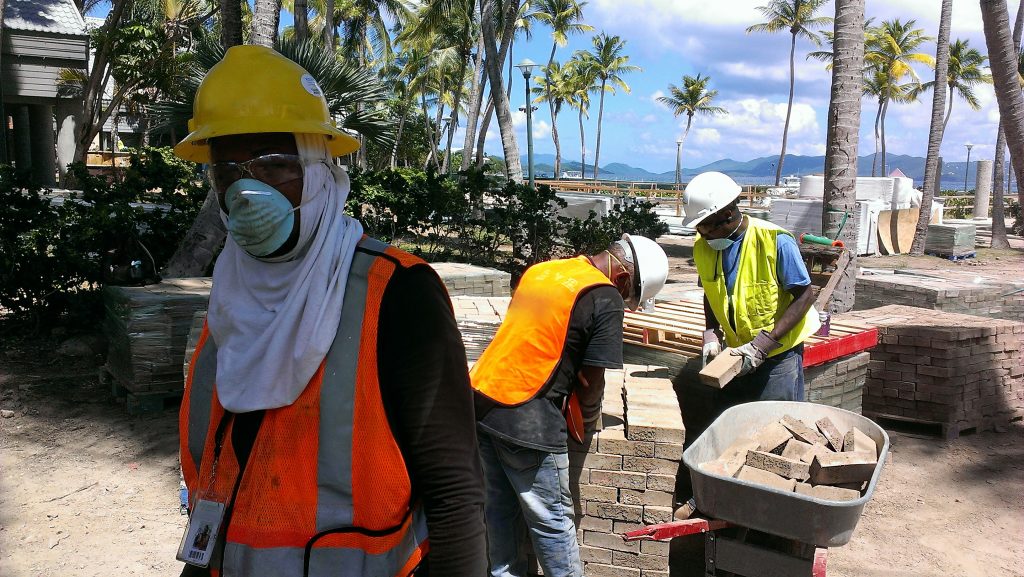
The French Agency for Food, Environmental and Occupational Health & Safety (Anses) is reportedly finalizing its research into the links between skin cancer and occupational exposure to ultraviolet (UV) radiation, with publication expected in October 2026, according to the French trade publication actuEL-HSE. The work concerns a new “tableau de maladie professionnelle” — France’s official list of recognized occupational diseases — since no such schedule currently exists for this condition. An Anses opinion from March 2024 had already explicitly identified two exposure-cancer combinations lacking their own schedule: non-melanoma skin cancer caused by UV, X-ray or gamma radiation, and melanoma caused by sunlight. The ongoing Anses review was confirmed via a written parliamentary question from Senator Alexandre Basquin in March 2025, to which the ministry responded in June 2025, at the time citing an expected completion date of late 2025.
France lagging behind neighbouring countries
With this step France is catching up with Germany, Switzerland and Belgium, which have long recognized squamous cell carcinoma caused by sunlight as an occupational disease. The gap in reported cases is stark: France’s RNV3P surveillance network records only around eighty new cases per year, whereas Germany registered roughly four thousand cases in the construction sector alone in 2023. There, UV-induced skin cancer is in fact the most common occupational disease in construction, with about six thousand reported cases annually. An estimated 1.5 million workers in France are occupationally exposed to UV; globally, a joint 2023 estimate by the WHO and the International Labour Organization (ILO) puts the figure at 1.6 billion exposed workers and nearly nineteen thousand deaths per year from non-melanoma skin cancer. A French socio-economic opinion (CESE, April 2023) identifies construction and agriculture in particular as high-risk sectors.
Underreporting as a driving factor
The process traces back to a May 2020 opinion from France’s High Council for Public Health (HCSP), which already urged inclusion in the occupational disease schedule. Since then, OCC-EXPRO has also been established — a national observatory for occupational skin cancer, running since June 2024, whose explicit aim is to raise the visibility of this condition and contribute to its recognition. This effort fits a broader pattern: the same senate question cites an estimated 69,600 to 102,100 occupational cancers per year in France, against fewer than 1,800 officially recognized cases — a figure covering occupational cancer in general, which illustrates the scale of underreporting in this area.
This is relevant for EHS professionals because the possible introduction of a new schedule could have implications for prevention policy, medical follow-up and compensation for workers who spend most of their time working outdoors, particularly in construction and agriculture.
Source: Cancers de la peau et UV : l’Anses finalise ses travaux sur un tableau de maladie professionnelle, 11 September 2026, https://actuel-hse.fr/content/cancers-de-la-peau-et-uv-lanses-finalise-ses-travaux-sur-un-tableau-de-maladie
Additional research: Sénat.fr (written question by Alexandre Basquin), Anses (opinion 2023-SA-0061), soleil.info, preventionbtp.fr, OCC-EXPRO/syndicatdermatos.org