
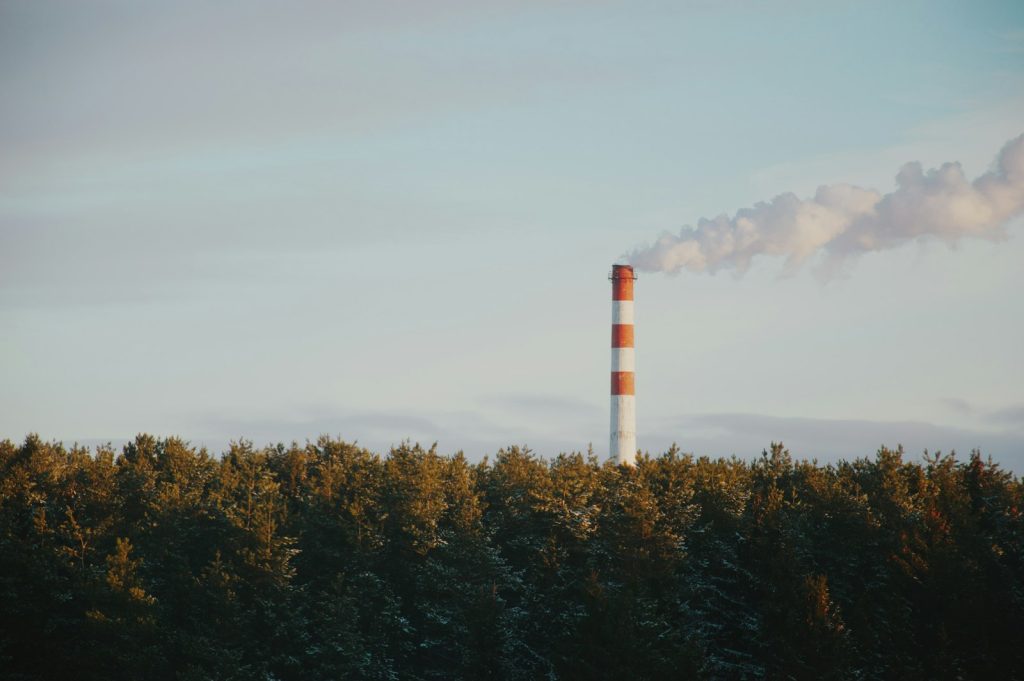
Wildfires are increasingly seen as a threat to industrial sites in France, including outside the historically vulnerable southern regions. Yet operators of regulated industrial facilities are not yet required to factor this risk into their hazard studies or emergency plans, even though the potential consequences for operational safety are significant.
From a Regional Problem to a National Concern
Until recently, wildfire risk was mainly attributed to a limited number of geographically vulnerable zones, particularly in France’s Mediterranean south. Climate warming is shifting that picture: longer dry spells and drier vegetation mean that areas which previously saw little wildfire activity now face an elevated risk. For industrial sites located near forests or natural areas, a risk long considered marginal can suddenly become operationally relevant.
No Requirement in Hazard Studies or Emergency Plans
Companies in France subject to the ICPE regime (Installations Classées pour la Protection de l’Environnement) — regulated industrial facilities comparable to permit-required high-risk operations elsewhere — must prepare a hazard study (“étude de dangers”) and, for the highest-risk sites, maintain an on-site emergency response plan (“Plan d’Opération Interne,” or POI). Both instruments map out the main accident scenarios, such as fire, explosion, or the release of hazardous substances. However, the risk of an external wildfire reaching a site and endangering the facility itself is not a mandatory part of these analyses. As a result, a realistic scenario — flames or showers of embers reaching a site that handles hazardous substances — can fall outside formal risk management. Actuel-HSE describes the risk as “vital” for some sites.
What This Means for HSE Professionals
For safety managers at industrial sites in fire-prone areas, the message is that regulatory requirements are lagging behind the actual development of the risk. As long as wildfire risk is not a standard part of the hazard study or the on-site emergency plan, the responsibility for assessing it falls to the operator itself. That argues for a proactive approach: incorporating wildfire exposure into routine risk assessments, even where it is not (yet) legally required.
Context
Wildfire risk in France has grown sharply in recent years: as early as April 2026, 52 of France’s more than 100 départements — nearly half the country — were classified as areas with elevated wildfire risk. By 21 July 2026, at least 44,000 hectares of forest and natural land had already been lost; by mid-July, the burned area was already twice as large as during the same period in 2025, with major fires in the French départements of Pyrénées-Orientales, Drôme, and Gironde, among others. According to France’s public climate adaptation agency, the number of days with elevated fire risk could double if warming reaches 2.7°C by 2050.
Source: Feux de forêt : un risque émergent mais vital pour les ICPE, 25 September 2026
Additional research: Forestry France – Feux de forêt : pourquoi le risque incendie gagne tout le territoire français


