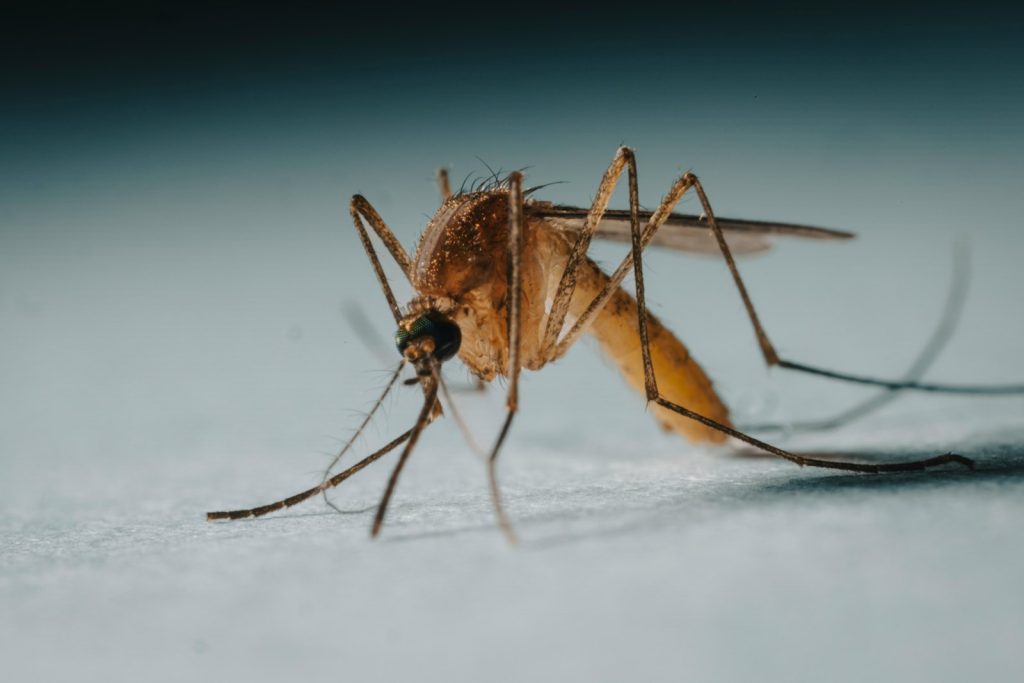
Spain’s occupational safety institute INSST published a technical document on 17 November on the impact of mosquito-borne diseases on workers. It appears at the end of a record season: according to the European Centre for Disease Prevention and Control (ECDC), the EU recorded 1.715 locally acquired human West Nile virus infections in 2026 up to and including 7 October, the highest number ever reported. By then, 130 people had died. These figures come from the ECDC; the INSST report announcement itself contains no figures.
Mosquitoes as an occupational risk: what INSST is investigating
The Instituto Nacional de Seguridad y Salud en el Trabajo (INSST) is investigating how diseases transmitted by mosquitoes affect the workplace, and whether certain groups of workers are more exposed because of their tasks. The document focuses on “the viruses that mosquitoes of the genera Aedes and Culex can transmit to humans,” two genera established at Spain’s latitude. According to INSST, climate change is altering the timing and geographic range of these vectors, allowing diseases to establish themselves in new areas or return to places where they had previously been eradicated.
The full report consists of four parts: the characteristics of these mosquitoes and the viruses they can transmit, occupational diseases reported in Spain caused by mosquito-borne biological agents, a literature review of the most vulnerable occupational groups, and general prevention recommendations for workplaces. The announcement does not specify exactly which occupational groups and measures the report names. On the document page, INSST also refers to earlier material: a poster and a leaflet from 2024 on vector-borne diseases in occupational activities and the prevention of mosquito bites.
West Nile virus reaches a record in Europe: differences by country and sector
The ECDC figures show large differences between countries. Italy is hardest hit, with 748 cases. Greece and France reported their highest numbers ever. Belgium recorded locally acquired infections for the first time (15 cases), and the Netherlands reported 59 cases this year: the virus is now circulating further north than before. According to the ECDC, there is no indication this year that the disease is more severe; the share of hospitalisations, neurological complications and deaths remains below the level of the past decade. The peak, then, lies in the number of infections and their geographic spread, not in the severity of individual cases.
Attention also differs by sector. On its thematic page on climate change, the European Agency for Safety and Health at Work (EU-OSHA) names vector-borne diseases, alongside heat, extreme weather and pollution, as a key risk for outdoor workers, and notes that diseases such as Lyme disease and dengue are spreading geographically. Only for agricultural and forestry workers does EU-OSHA explicitly link an infection risk to a sector, and that concerns tick-borne diseases. Mosquitoes are not specifically mentioned on the page.
What this means for outdoor work
The ECDC figures show that West Nile virus is no longer a purely southern European problem: Belgium and the Netherlands are now reporting cases too. Anyone doing outdoor work in agriculture and forestry, landscaping or construction who relies on EU-OSHA’s sector information will find ticks there, but not mosquitoes. The INSST report, by contrast, focuses specifically on mosquitoes, bringing together reported occupational diseases, vulnerable occupational groups and prevention recommendations in a single document.
Source: Exposición a agentes biológicos: enfermedades transmitidas por mosquitos y su impacto en el ámbito laboral, INSST, 17-11-2026