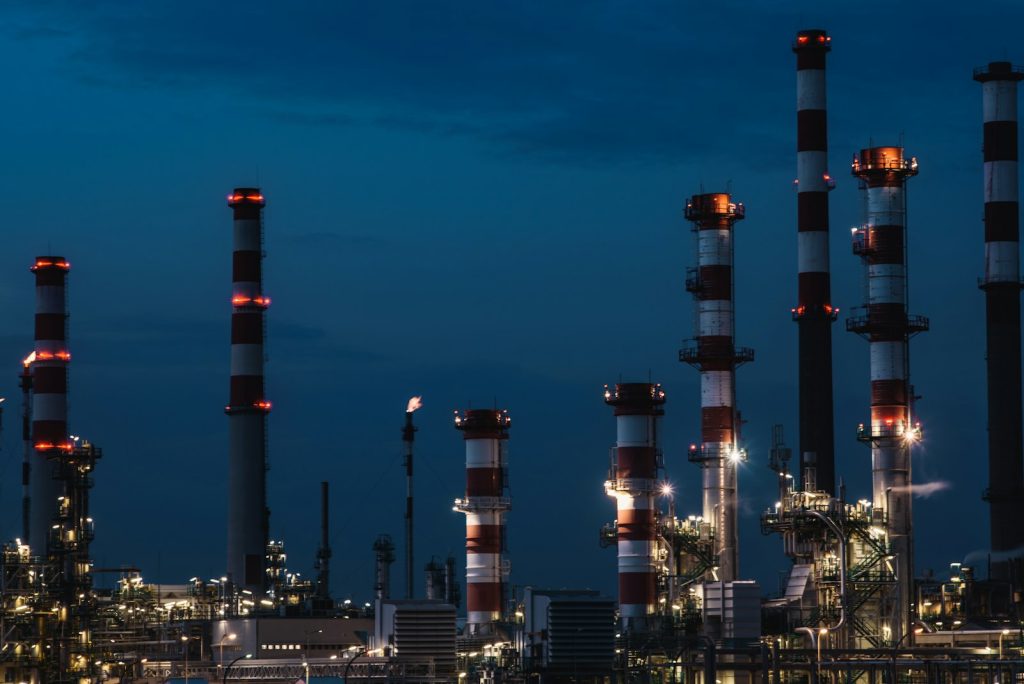
At the refinery in Mongstad, Norway, a lifting banksman died on 17 September 2025 after a heavy heat exchanger was unintentionally lifted and swung into him. The Norwegian regulator Havtil published an investigation report on 5 November 2026 identifying nine failures by operator Equinor and lifting contractor Crane Norway Vest, and issued formal orders to both companies.
What happened?
The accident happened during TA25, a planned major maintenance shutdown. A lifting crew had moved a heat exchanger of roughly 7.5 tonnes to the flushing and inspection area for inspection and was preparing the next lift. As the lifting gear was hoisted, a hook caught on a bolt still left in the exchanger’s flange. This caused the load to be lifted unintentionally and swing sideways. The load struck the lifting banksman (in Norwegian, anhuker), who attaches and releases loads. He became trapped between two heat exchangers and died of his injuries shortly afterward. Several other people nearby were at risk of injury.
Havtil’s findings
Havtil identified nine deviations: six at Equinor and three at Crane Norway Vest. At Equinor, the material handling plan did not state the weight of the loads or which lifting equipment was to be used, and it lacked a description of safe lifting at the flushing area, as required by NORSOK R-002 annex B. Risks were insufficiently assessed in the early planning stage, lifting at the flushing area was wrongly treated as routine work, and no additional operations supervisor was appointed, although Equinor’s own governing documents require this for large activities such as a maintenance shutdown. Follow-up fell short: hired lifting banksmen and signalers received no additional training, many staff did not have the contractually required minimum of one year’s relevant experience, lessons from earlier maintenance shutdowns were not applied, warnings about staff shortages did not lead to timely action, and earlier incidents were reported verbally but not logged. The operations supervisor for lifting had insufficient capacity and was not present at any lifting activity at the flushing area. Planning and material handling deviated from Equinor’s own procedures; the work permit lacked risk assessments, meaning the lifting team was not aware of all the risks. Finally, emergency calls over the radio did not reach everyone, particularly not the crane and lifting personnel.
Crane Norway Vest did not provide sufficient information, induction and workplace-specific training for hired lifting banksmen and signalers. Lifting operations were not carried out according to its own procedures: staffing was too low, work was not halted during understaffing or when people were in danger zones, and the lifting equipment was not checked before use and was damaged and incorrectly assembled. The company also failed to ensure the competence of lifting personnel, including the contractually required experience.
According to Havtil, the bolt left behind was the direct cause, but weaknesses ran through the entire chain, from planning and competence to execution and follow-up. Havtil director Sigve Knudsen called it a serious incident with a tragic outcome: “A young man lost his life,” and many people were affected by it.
Orders (pålegg)
Havtil issued both companies a formal order (pålegg) under Article 69 of the Norwegian Framework Regulations (Rammeforskriften). Equinor must systematically map lifting equipment and the lifting area, reduce risks and update the material handling plans. The company must submit a time-bound plan by 25 November 2026 and have the order carried out by 30 April 2027. Crane Norway Vest must, by 23 February 2027, review how lifting operations are carried out and whether information reaches users, verify that its own and hired personnel have the necessary competence, and introduce routines to maintain that competence. Both companies must report compliance to Havtil and support it with documentation.
Context
NORSOK R-002 is Standard Norge’s technical standard for lifting equipment, accessories and components in the Norwegian oil and gas industry. The standard applies to offshore installations, but also to onshore facilities with petroleum activities, such as the refinery in Mongstad. According to Havtil, annex B requires material handling plans to state the weight of loads and the lifting equipment to be used; that was exactly what was missing at Equinor.
What does this mean in practice?
For HSE professionals planning lifting work during maintenance shutdowns, the report shows how lifting considered routine can fall outside risk management. Checkpoints from the findings: weights and lifting equipment in the material handling plan, an operations supervisor actually present, checking lifting equipment before use, workplace-specific induction for hired personnel, and emergency calls that also reach crane crews.
Source: Havtil investigation report on fatal lifting accident at Mongstad, 05-11-2026
Additional research: NORSOK R-002:2017+AC:2019 – Lifting equipment (Standard Norge)