
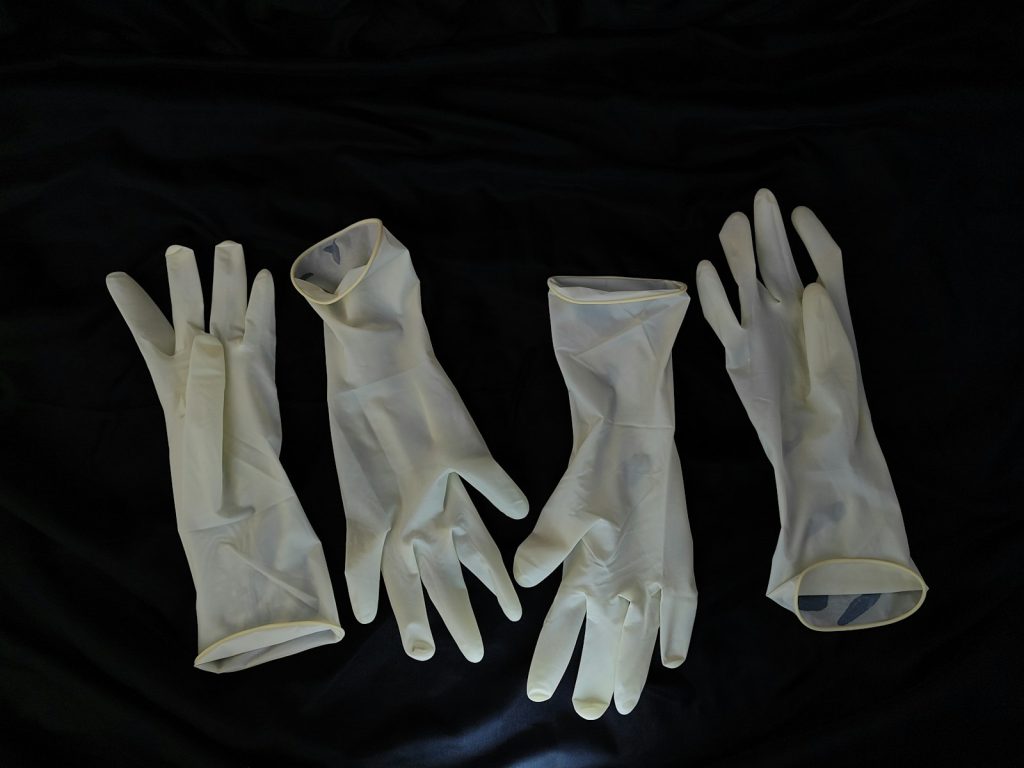
Spain’s National Institute for Safety and Health at Work (INSST) published an information leaflet on protective gloves for hairdressers on 22 October 2026. With the leaflet, the institute aims to make hairdressers more aware of the importance of suitable gloves and to encourage their use. According to INSST, hairdressing is a sector that frequently faces skin problems. The leaflet also draws attention to the recent publication of a specific standard for this type of personal protective equipment (PPE).
A trade with an elevated risk of skin complaints
INSST does not back up its claim with figures in the announcement. However, occupational health practice generally explains why hairdressers, in Spain and elsewhere, are vulnerable. They work daily with water, shampoo, hair dye and perming solutions, which means their hands are exposed to moisture and chemicals for long periods. Internationally, this combination is regarded as a major cause of occupational contact dermatitis and other hand eczema: often starting as irritation from frequent washing and degreasing of the skin, and sometimes later developing into an allergic reaction to substances such as persulfates in bleaching powders or dyes in hair colourants. Trade literature shows that such complaints regularly arise already during training or in the first years of work. This background is general context and is not part of INSST’s announcement.
Standard announced, but not named
INSST reports the “recent publication of a specific standard” for this type of protective equipment, but does not give a name or standard number in its announcement. The leaflet, titled “Guantes de protección para peluquerías” (Protective gloves for hairdressing salons), is meant to encourage the use of suitable gloves in the hairdressing trade. The announcement itself does not clarify exactly what requirements the new standard sets. General advice on hand protection in this sector usually recommends matching the type of glove to the task, for example using chemical-resistant gloves for colouring or bleaching, replacing damaged or leaking gloves immediately, and thoroughly drying and caring for the hands with a rich cream after work.
Context
The Spanish publication fits into a wider European process. For more than ten years, the European social partners UNI Europa (trade unions) and Coiffure EU (employers), supported by the European Commission, have been working on a framework agreement on health and safety in the hairdressing sector. That agreement also includes guidelines for personal protective equipment. According to UNI Europa, chemical-resistant gloves are recognised under EU law as category III PPE, the category for high risks. A specific standard for hairdressing gloves has been developed at European (CEN) and international (ISO) level; as of mid-2025, UNI Europa said it was still awaiting a positive vote. The Spanish announcement may indicate that this process has since been completed, but INSST’s announcement does not make clear whether the standard is Spanish, European or international.
Source: Guantes de protección para peluquerías – Año 2026 (INSST, Spain) and Cutting risks, not corners: hairdressers lead EU health & safety innovation (UNI Europa).